
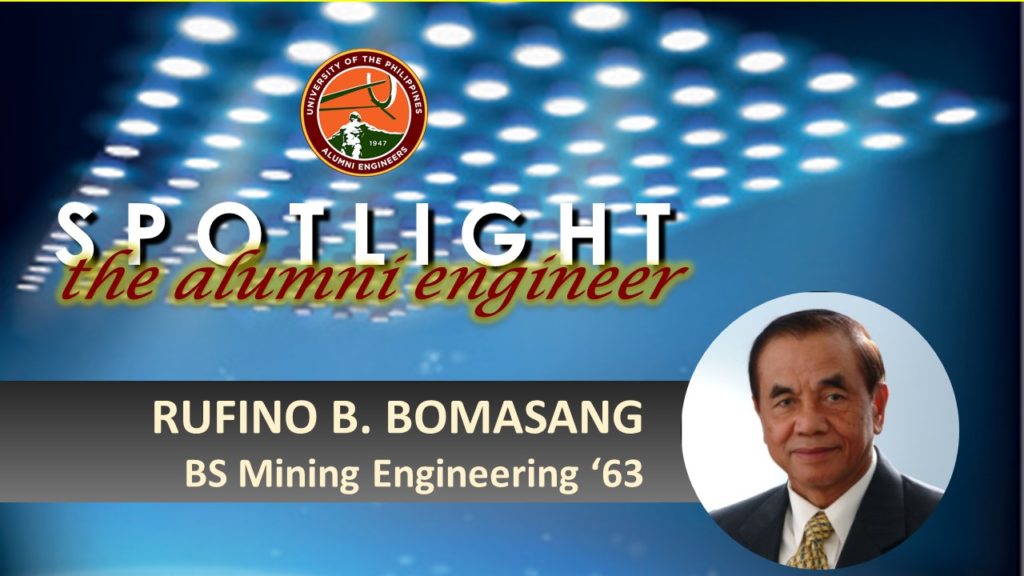
The only son of poor Igorot peasants in Besao, Mt. Province in the hinterlands of the Cordillera, he had to gather and sell firewood just to earn school allowance. Determined to qualify for a college scholarship, he took the competitive scholarship examinations in Baguio given by the National Association of Mapua Alumni (NAMA) and the Commission on National Integration (CNI). After excelling in both, he was asked to choose between the two scholarships, and he chose the CNI scholarship. He eventually enrolled at UP, taking up mining engineering. This offered the best opportunity to get a stable job soonest.
Please briefly tell us about your first 5 years out of college. What were your aspirations when you graduated?
After finishing mining engineering in 1963, I was preparing to apply with the big American owned underground copper-gold mines in the Cordillera region, even if young Filipino mining engineers had to undergo up to five years training just to become frontline supervisors (i.e. capataz, or at best shift boss). The higher levels (i.e. foremen, superintendents, department heads, and managers) were generally held by Americans, or Filipinos with decades of supervisory experience.
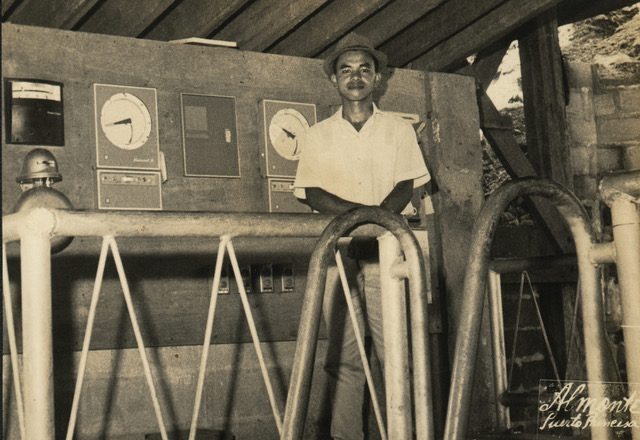
I was among three fresh graduate engineers chosen to undergo management training at Procter and Gamble Philippine Manufacturing Corporation (P&G PMC), then a dream company for young engineers. I soon became a shift manager at the oil mill (processing copra to produce coconut oil).
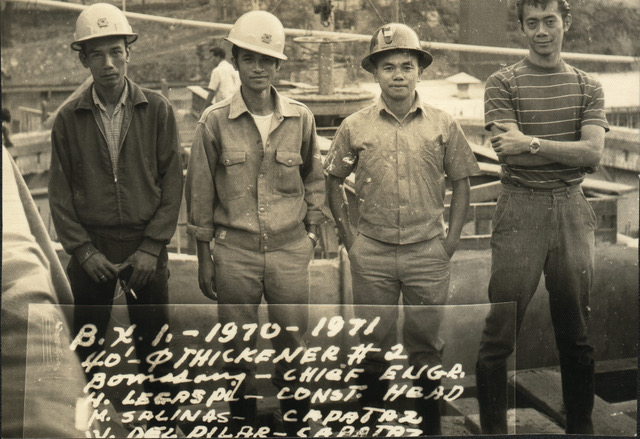
After topping the mining engineering board examinations, I was offered the job of mill superintendent at Palawan Quicksilver Mines (PQM). After a few months of probationary employment, I became mill superintendent at the relatively young age of 24. Three years later, Mr. Adam Roy Reed, the American Resident Manager of Itogon-Suyoc Mines, Inc. (ISMI), urged me to join the mainstream gold-copper mining industry in the Cordilleras and broaden my experience. Thus, I joined ISMI as Head of the Planning, Research and Safety Department at its Suyoc underground gold mine and was soon promoted superintendent of its Boneng copper-gold exploration project. In summary, I was able to handle senior field management positions during my first five years, even if I did not go through the long years of mine apprenticeship.
I later moved successively to other mining companies and by 1975, my 11th year in the mining industry, I was Resident Manager of Falcon Rare Metals and Industrial Minerals, the highest field management position in a mine.
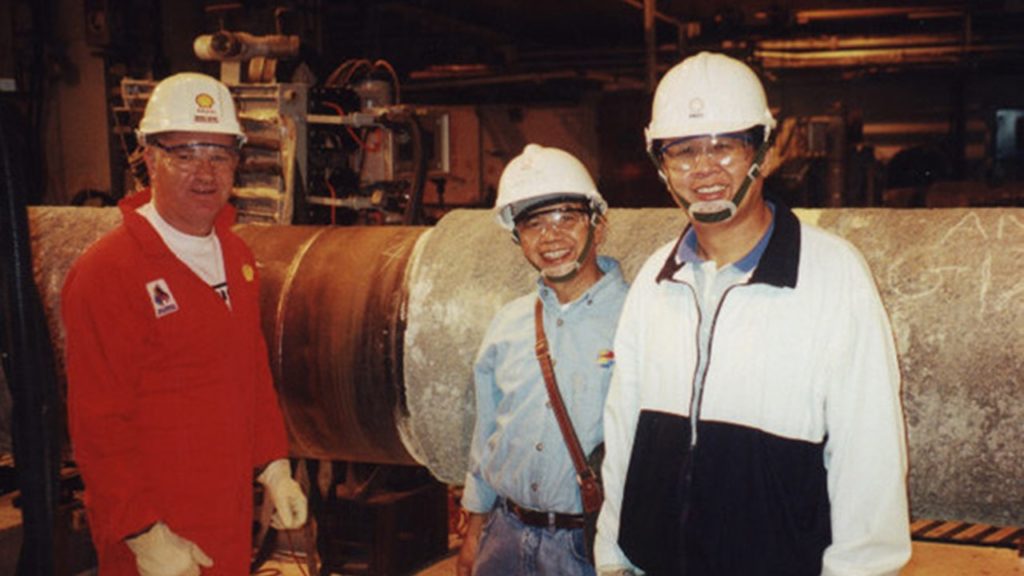
At the height of the oil crisis in 1976, however, I was invited to join the Energy Development Board (EDB) to help implement a national energy development program to reduce the country’s dependence on imported energy. My initial assignment was to help expand local coal production,then the only proven indigenous fossil fuel. Later I served in various senior positions (i.e. EDB Development/Production Manager, BED Coal and Uranium Division Chief, PNOC Coal Corporation General Manager, OEA Executive Director, DOE Undersecretary, Gas Office Senior Adviser, and PNOC Exploration Corporation President/CEO) until I retired in 2004.
After retirement, I rejoined the private sector where I continued to be involved in indigenous energy development. My focus then shifted to renewable energy, especially as chairman of PhilCarbon, but I was also later elected chairman of the Philippine Petroleum Association of the Upstream Oil and Gas Industry (PAP) and the Philippine Chamber of Coal Mines.
What were the major turning points in your career?
My joining P&G PMC (now P&G Philippines) soon after graduation in 1963 was an unexpected turning point. It was here where I learned fundamental principles that have guided me throughout my professional career. I learned that there is always a better way as there is never a process, or system, so perfect that it cannot be improved. I would not have learned this if I immediately joined the mining industry where senior supervisors, especially old timers with decades of experience, are very conservative and generally tend to resist change.
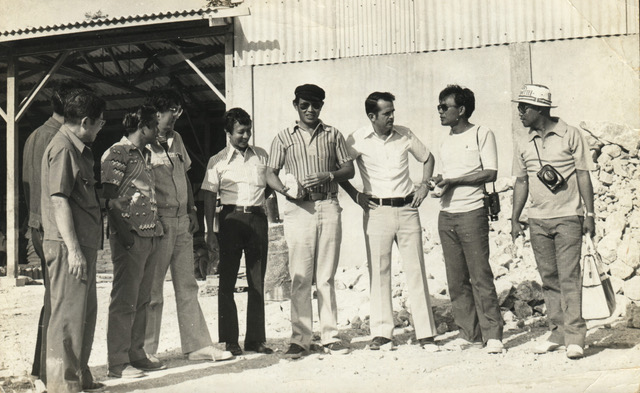
The second turning point was when I joined the public energy sector at the height of the oil crisis in 1976. I was willing and eventually learned to adjust to a totally new environment. Notwithstanding the usual replacement of senior government officials with every change in administration, I was retained by all succeeding administrations from Cory Aquino to GMA until I retired in 2004. Furthermore, I was later recalled to serve as non-executive director of PNOC-EC by President Noynoy Aquino and served as such even up to the 7 th month of the Duterte administration.
The third turning point in my career was my “conversion” to the “gospel” of renewable energy, particularly wind and solar. I used to think it would take several decades before they could ever become commercially viable alternatives. T here are now over 1000 megawatts of solar farms and almost 500 megawatts of wind farms all over the country. I find great professional satisfaction in being involved with renewable energy companies (i.e. Philcarbon, Upgrade Energy, and Preferred Energy), even while promoting the development of the other major indigenous energy sources (i.e. oil, natural gas, and coal).
What would you consider as your greatest accomplishment?
As of this writing, the Philippines is much more secure than it was since in 1976, with its 92% dependence on imported energy substantially reduced by 2016 to about 40% (and only 32% on imported oil, the rest being imported coal). Among others, this has been mainly the result of: small but commercial oil discoveries, the geothermal success story, the birth of the natural gas industry anchored by Malampaya, the dramatic expansion of coal production (mainly from Semirara), and most recently the exponential growth of the renewable energy sector.
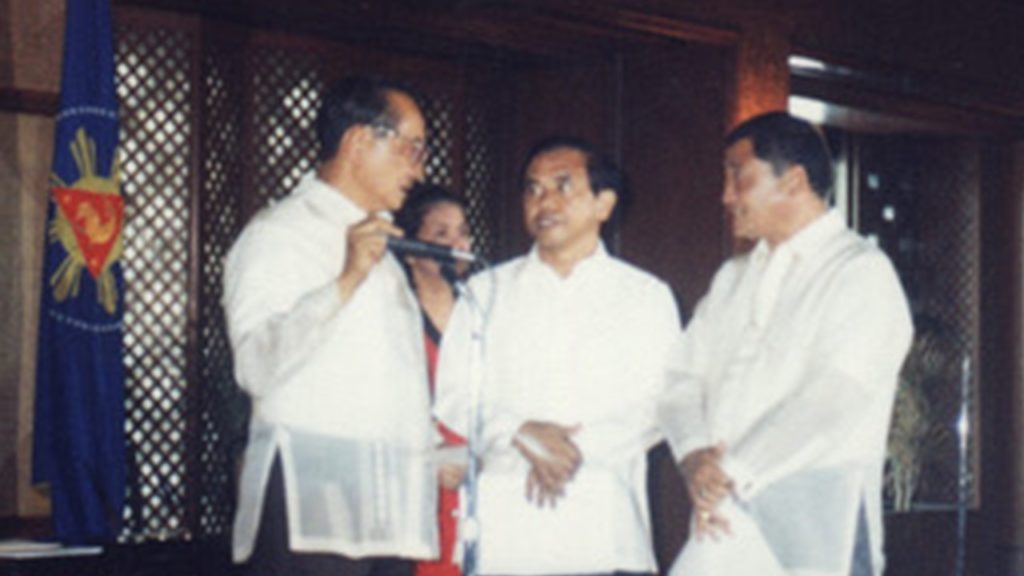
Although I had some involvement in all the above success stories, especially in coal, my greatest accomplishment was my continuing involvement in Malampaya from gas discovery in 1992 (when I was Executive Director of the Office of Energy Affairs) to project commissioning in 2001 (when I was President / CEO of PNOC-EC). By August 2019, the MGPP (a) had contributed US$11 billion to Philippine coffers, and is expected to contribute almost US$ 1 billion a year for at least the next six years ; (b) continues to save for the country at least US$ 800 million annually in foregone energy imports; (c) consistently fuels 40 to 50 % of the power requirements of Luzon; and (d) has given birth to the era of natural gas, a fuel much cleaner than coal with at least 50% lower greenhouse gas emissions.
In my view, the MGPP is the most important single upstream energy project in Philippine history and I am proud to have played a continuing role since gas discovery in among others, I approved the appraisal drilling program as OEA Executive Director in 1992; monitored its implementation from 1992 to 1994 and ultimately confirmed the gas reserves as DOE undersecretary; assisted the DOE secretary as senior adviser to the gas office from 1995 to 1996, particularly in facilitating the gas supply and purchase agreements between gas buyers and sellers; initiated discussions on PNOC-EC’s participation as its President/CEO and facilitated the farm-in agreement between PNOC-EC and SPEX from 1998 to 1999; and represented PNOC-EC in the Malampaya joint venture operating committee during the commercial operations stage.
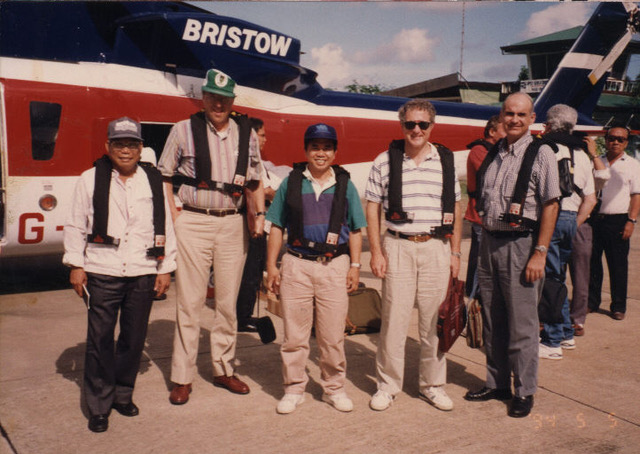
Furthermore, when the Malampaya Foundation, Inc. (MFI), was set up in January 2007 as the social development arm of the joint venture to help uplift the lives of potentially impacted areas along the pipeline route, I was elected as an independent member of the board of trustees (BOT). Utimately, I was elected MFI BOT chairman in 2009 and remained as such up to now. I am proud that MFI has won so many awards from local, national, and international organizations for its livelihood and environmental protection programs, especially in the protection and preservation of marine biodiversity in Northern Palawan and Oriental Mindoro. It was largely because of my involvement in Malampaya that I was chosen as one of the top 100 alumni engineers of the 1st century (1910 to 2010).
What would you consider as the greatest challenge you faced and what was it that helped you overcome it?
My greatest challenge has always been to effectively manage operations, or processes, with which I was not familiar, especially at key junctions in my career. I knew nothing about processing copra to produce coconut oil when I first joined P&G PMC. I only had general knowledge about mercury processing when I first joined PQMI. I was not familiar with diamond drilling when I was made superintendent of an exploration project. Finally, I had not even seen or touched coal when I was mandated to help expand the local coal production.
All these new assignments were, however, essentially management jobs and all I needed was to get the cooperation of my peers and subordinates who knew more about the operations than I did. Thankfully, I got their cooperation, even as I was still learning the technical details of the new operations (e.g. oil milling, mercury processing, diamond drilling, coal mining, etc.). I never pretended to know what I did not know. Realizing the vital importance of communications, I never hesitated to ask and learn from my experienced subordinates, and peers, whose expertise I have always acknowledged. On the other hand, even as I was learning more and more from them, I never forgot the principle that there is always a better way and encouraged my subordinates to help me look for improvements. They did and when it resulted in concrete improvements I never claimed sole credit. In short, I succeeded in managing new operations and processes through constant communications with my peers and subordinates, enabling me to tap their expertise, get their cooperation, and inspiring them to aspire and look for improvements.
How did your years with UP under the COE program help you with your work?
I am glad that I enrolled at UP, a market place of ideas where academic freedom allows students to explore different ideas and encourages critical thinking. UP prepares its engineering graduates not just for the board examinations but to become ingenious engineers and effective managers. In my view, it was my well rounded UP education that largely facilitated my management career in both the private and public sectors, enabling me to overcome new challenges with every transition and ultimately to play major roles in energy projects and programs of national importance.
What lessons learned would you impart to young UP engineers?
Throughout my 55-year professional career, I have found out that the simple but profound lessons I first learned at the onset of my professional career in 1963 have continued to be relevant and applicable, and even more so during this complex and high-tech world of the 21 st century.

Firstly, as earlier mentioned I learned that there is always a better way as there is never any process or system that is so perfect that it can’t be improved. Secondly, I learned that resistance to change can be the greatest obstacle to one’s career. Some classic examples are Filipino nurses in the US I know who could not adjust to new systems (e.g. digitized records, etc.) and had to go on early retirement. Thirdly, I learned that communications is indeed the essence of effective management. It was largely because of constant communications with my peers, superiors, and subordinates that I was able to effectively manage a variety of operations. Finally, despite the complexity of the modern high-tech world, I found out that the old-fashioned values–willingness to work hard, diligence, honesty, integrity, perseverance, respect for others–are of utmost relevance and importance. Apart from my willingness to learn new things and adjust to new conditions, I believe it was largely because of my adherence to these values that I was retained as a senior official by every administration, giving me the opportunity to play key roles in projects and programs of national importance.